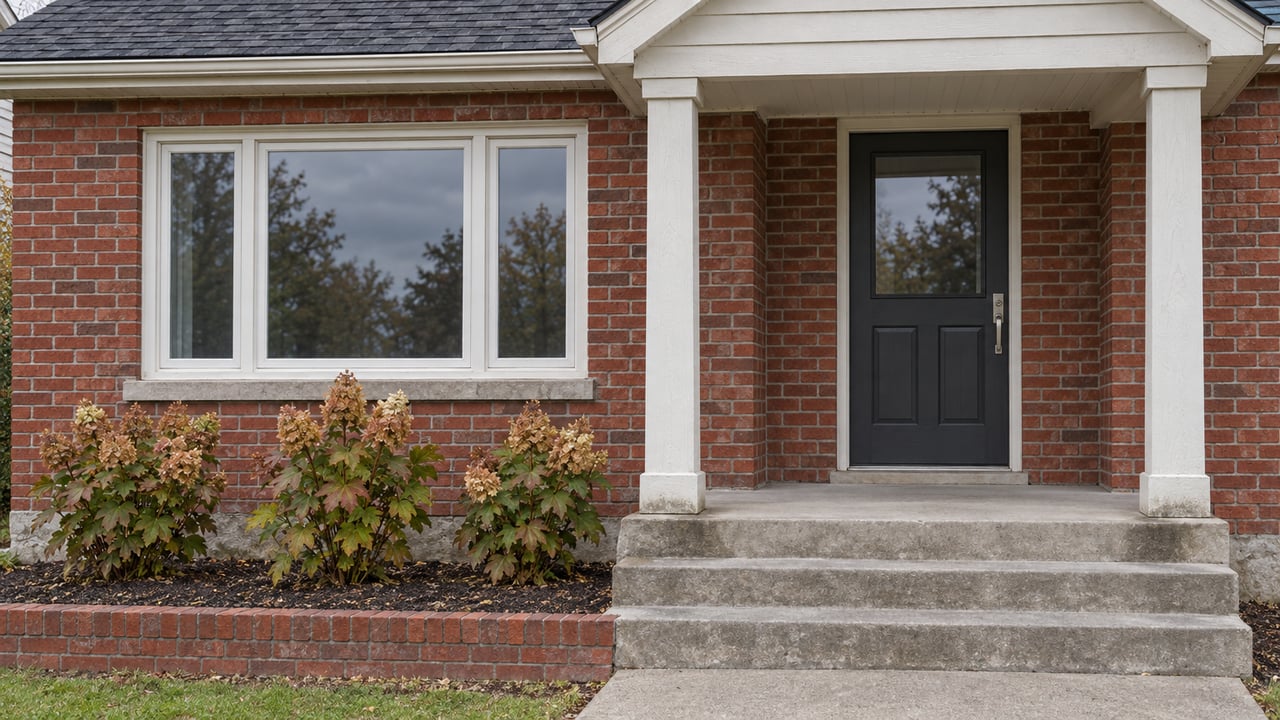
Berkley Zoned for Four Stories. Why Is Coolidge Still Waiting on New Homes?
October 8, 2026
October 8, 2026
Some Berkley homeowners plan to sell the family house and move into a new apartment or condo a few blocks away. That plan depends on a building that doesn't exist yet, and the city's own numbers suggest it could be years away. In August 2026, Berkley City Council adopted an Economic Development Strategy prepared by the consultant Better City. The strategy includes financial models for specific corridor sites. Each one shows a building that loses money or earns far less than investors expect, even after public subsidies.
That matters for anyone timing a downsize, comparing Berkley with nearby Woodward Corridor suburbs, or watching Coolidge Highway and Twelve Mile Road for new options. For now, the zoning allows new housing that the finances won't support.
Berkley rewrote its zoning ordinance in 2025, and the new rules allow buildings up to four stories in its commercial corridors. The strategy calls this "deliberate policy judgment that residential density is the precondition for commercial viability." The idea is that apartments upstairs bring more residents downtown, and those residents support the shops at street level.
The strategy also notes that Berkley "is nearly completely built out." With almost no vacant land left, nearly every new project means tearing down or reusing something already standing. It names six priority sites on Twelve Mile, Coolidge, and Eleven Mile, and for three of them it runs the full numbers.
| Site | What the strategy envisions | Total cost | Projected annual cash flow |
|---|---|---|---|
| 2555 W. Twelve Mile, home of O'Mara's Restaurant | Shop-front retail with O'Mara's keeping about 6,000 sq. ft. and 2.5 stories of apartments above | $16.51M | $60,600 |
| Eleven Mile Road and Coolidge Highway corner | 20,300 sq. ft. of retail for Hunt Signs and Home & Door Products, plus a lumber yard building, with two floors of housing | $37.5M | Negative $121,318 |
| 4105–4195 Twelve Mile block | 10,000 sq. ft. of retail with 12 one-bedrooms and 16 studios | $9.84M | Negative $45,773 |
The O'Mara's site is the only one of the three that makes money on paper, and only barely. Its model already includes $2.26 million in DDA tax-increment money to buy the land, clear it, and prepare it, plus a $1 million MEDC grant. The strategy still concludes that "under current market conditions, the project isn't financially feasible." For the Twelve Mile block, it says developers would expect at least an 8% cash-on-cash return, which leaves a gap of almost $300,000 a year. At that 8% benchmark, the O'Mara's site's $4.02 million in equity would need to return about $320,000 a year. The model projects $60,600.
The Eleven Mile and Coolidge corner shows the same problem at a larger scale. The table shows a loss of about $121,000 a year after debt payments, while the text puts the projected annual shortfall at $325,000. Either way, the project loses money.
These models don't assume low rents. The Eleven Mile and Coolidge plan assumes $1,900 a month for a 630-square-foot one-bedroom and $2,300 for a 990-square-foot two-bedroom. The Twelve Mile block assumes $1,900 for an 826-square-foot one-bedroom and $1,400 for a 552-square-foot studio. Rent isn't the main problem. The strategy points to three costs:
The third point explains why the corridors are hard to build on. Berkley's plan puts shops on the ground floor of Twelve Mile and Coolidge, so the apartments above have to make up for the weak retail rents. The strategy describes the usual problem in inner-ring suburbs this way: land and demolition costs, "combined with the need to support ground-floor commercial rents below market rate, make projects that are viable on paper difficult to finance in practice."
The strategy's answer is for the DDA to borrow against future property taxes, buy sites at full market value, clear and prepare them, and then give them to a developer for $0 under a development agreement. It says none of these projects "would have any chance of moving forward without these tools." Even with free land, the three models still lose money or fall well short of what investors expect.
Berkley does have one approved multifamily project. WJ Ventures' development The Columbia covers 0.83 acres on Columbia Road and Cambridge Road, at Coolidge. City Council approved the plan in 2024 and approved a revised version in 2025 that cut it from 57 units to 51 in a single four-story building. The project website says it will replace three 80-year-old duplexes. It describes the floor plans as options for "people who currently live in the Berkley, Oak Park and Huntington Woods area and are transitioning from homeownership to simplified living."
That is the downsizer's plan from the opening paragraph, and this building has run into the same financing problem. In 2025, the developer applied for a workforce-housing PILOT, which would replace standard property taxes with a payment based on a percentage of rental income. The city's analysis found a $2.58 million financing gap with full property taxes, using an average rent of $1,850. It also found that private financing wasn't available without a tax break. On October 20, 2025, Council voted 7–0 to postpone the PILOT request to an undetermined date.
The project's website still describes a 51-unit building with a community pocket park and covered parking. We found no public record of a groundbreaking or leasing. The fair way to describe The Columbia is approved, with its financing incentive postponed.
If your plan depends on new housing in downtown Berkley, use the timeline the public record supports. For the near future, your choices in Berkley are mostly its existing homes.
That affects the order of a move. A downsizer who wants to stay near Twelve Mile can't count on a new condo or apartment opening on a set date. That makes the next home, and when the current house gets sold, a separate question. Families moving up face something similar. Corridor projects aren't adding homes for those households to move into, so new choices in town come mostly from existing homes going up for sale.
The countywide market shows a different picture. Realcomp's August 2026 figures for Oakland County show 3,903 listings at the end of the month, up 24.3% from August 2025. Closed sales fell 6.3% to 1,489, and the median sale price rose 2.6% to $395,000. Those are county numbers, and we couldn't find a public Berkley-only report for the same month. They show more homes for sale across the county, while Berkley's planned path to new homes on its corridors is still waiting on financing.
The strategy lists what would make these projects work: lower interest rates, lower construction costs, higher rents, MSHDA incentives, and design changes that cut costs. The city is already working on several fronts:
If the DDA buys and clears its first site, that will be the clearest sign that new corridor housing is getting closer.
Does the zoning change mean apartments are coming to Twelve Mile soon? The zoning allows them. The city's own models show the priority sites losing money or falling short of what investors expect under current rates and costs. The strategy recommends that the city stay in touch with the O'Mara's site owner, who wants to keep running the restaurant, and wait.
Is The Columbia cancelled? We found no record of a cancellation. The last Council action we found was the October 2025 vote postponing its PILOT request, and the project website still describes the 51-unit plan.
Were local real estate professionals involved in the strategy? Yes. Katie Kutscher of our team, whose name the document spells "Kutcher," is listed among the stakeholders who took part in the planning process, along with representatives of the Greater Berkley Chamber of Commerce and local developers.
If you're planning a downsize or a move-up around Berkley and want to line up your sale with the options that actually exist today, K&K Real Estate Group can help you map out the timing. Let's Start a Conversation.
This article is general information, not legal, tax or financial advice. Consult a qualified professional about your situation.
Stay up to date on the latest real estate trends.
Connect with a real estate professionals who values trust, insight, and personal attention. Every step is guided by a deep understanding of what “home” truly means.
Get In Touch With Our Team To Learn More
K&K Real Estate Group
ADDRESS 26236 Woodward Ave Royal Oak, MI 48067